
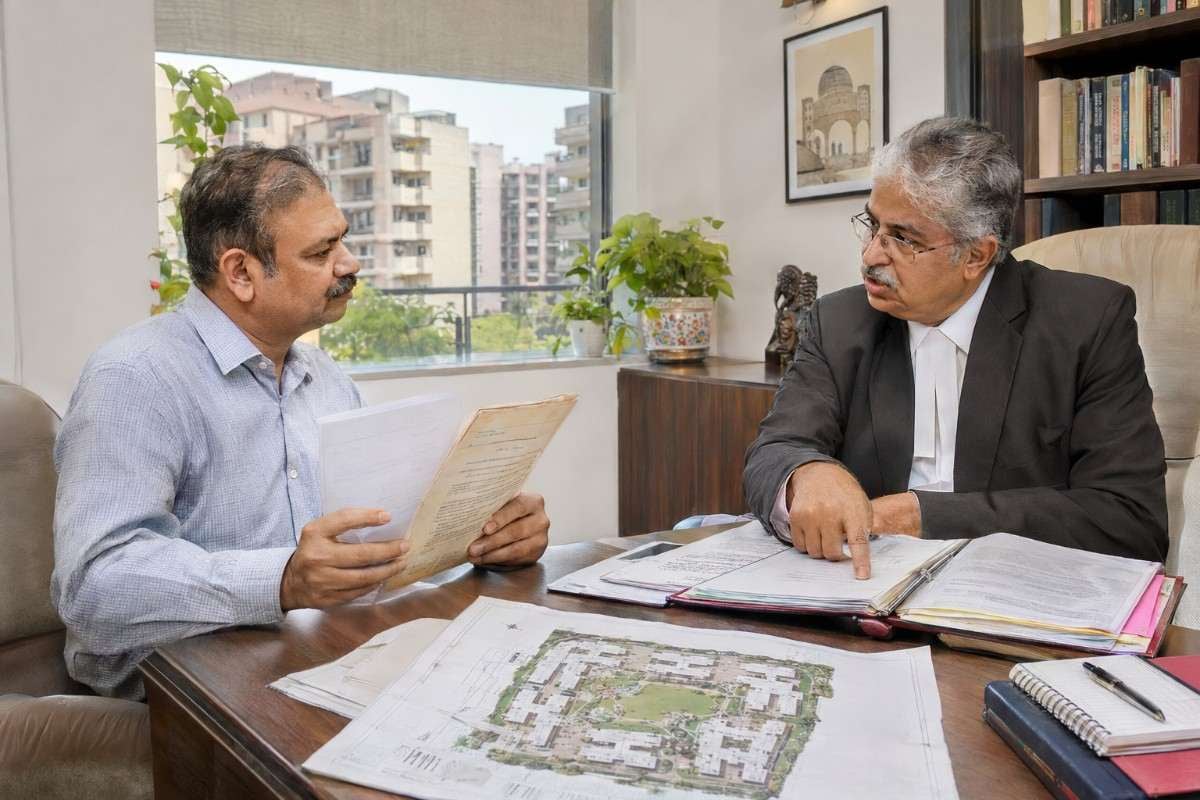
Inheriting Leasehold Property: DDA & Noida Rules
A father passes away, and his flat in a DDA colony needs to be transferred to his children. The family assumes it works like any other inherited property: sort out the Will or succession papers, update the records, and it is done.
Then they discover an important distinction: the land continues to be held by DDA, while the deceased held leasehold rights over the property. Before the heirs can fully deal with those rights, DDA may require its own mutation process and supporting documents.
This can be confusing because leasehold property can generally pass to legal heirs, but the inheritance and the authority's record-update process are two separate steps. This blog explains what leasehold property means, how succession works for DDA and Noida/Greater Noida properties, and where freehold conversion fits in.
Key Highlights
Leasehold property is inheritable like any other asset. The owning authority doesn’t block succession, but it does need its own mutation or transfer process before heirs are recognised.
Who inherits is still decided by a Will or succession law. The authority only checks the paperwork before updating its records.
DDA’s mutation process asks for different documents depending on whether there’s a registered Will, an unregistered Will, no Will, or a court-granted probate.
Noida and Greater Noida Authority properties work similarly, but use a Transfer Memorandum rather than DDA’s mutation format.
Freehold conversion is a separate process from inheritance and mutation. For DDA properties, fresh residential freehold-conversion applications have been on hold since 2 January 2026 pending further orders/policy action.
A missing death certificate or relinquishment deed is the most common reason mutation gets delayed.
What Does “Leasehold Property” Actually Mean?
A leasehold property means the land itself still belongs to the development authority, usually for a 90 to 99 year term. What the original allottee bought was the right to build on, live in, and later transfer that right, not the land underneath it.
DDA, the Noida Authority, and the Greater Noida Industrial Development Authority (GNIDA) all allot land this way. The lease deed or allotment letter sets the rent, term, and conditions, and any major change of hands needs the authority’s own approval, not just a private sale deed.
This is the detail that many families overlook after a death. A privately owned flat passes to heirs through a Will or succession law alone. A leasehold interest can pass to the deceased's legal heirs through a Will or the applicable succession law. But the authority may still require its own mutation or transfer process before it records the heir as the person entitled to deal with the leasehold rights.
Does a Leasehold Property Pass to Legal Heirs Like Any Other Asset?

Generally, yes the deceased's leasehold rights can devolve on the persons entitled to inherit them, subject to the terms of the lease and applicable succession law.
Where there is a valid Will, the Will determines the intended beneficiary, subject to applicable law. Where there is no Will, the heirs are determined under the succession law applicable to the deceased.
What changes with leasehold property is the additional authority-level process.
Once the succession is established, DDA, Noida Authority or another relevant authority may require mutation, transfer or other formal recognition before its records are updated. Until that happens, the authority's records may continue to show the deceased as the allottee or lessee.
How Does DDA Handle Mutation After the Allottee’s Death?
DDA’s own handbook of mutation sets out a clear detailed process. The family applies to the Deputy Director concerned, using a prescribed form, and the documents needed depend on how the deceased left the property.
Every application needs these regardless:
The original death certificate
An affidavit listing all legal heirs, their relationship to the deceased, and their ages
An undertaking to abide by the original allotment’s terms
An indemnity bond from whoever is being mutated into the records
Photographs and signature specimens, attested by a Gazetted Officer or a First Class Magistrate
Proof of relationship to the deceased, similarly attested
A mortgagee’s no-objection certificate, if the flat was mortgaged
What’s added on top depends on the situation:
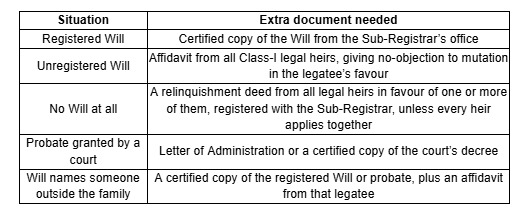
Mutation in favour of a spouse, child, sibling, or similar family member is exempt from the unearned increase charge DDA would otherwise levy. Mutation outside the family needs sign-off from the Vice Chairman instead of the Deputy Director alone. Where no Will exists, this is also when a family typically needs a legal heir certificate to establish the heirs, and AasaanWill helps work out which document set applies before anything goes to DDA. The important takeaway is that having a Will does not eliminate the need to complete the authority's mutation process.
What’s Different If the Property Is in Noida or Greater Noida?
Noida and Greater Noida also have authority-level procedures for transferring leasehold rights. A Transfer Memorandum is used in the relevant transfer process.
The exact procedure and documents can vary depending on the property, allotment, lease terms and the applicable authority policy. Transfer Memoranda are an established part of the Noida/GNIDA leasehold transfer framework.
A Transfer Memorandum is more commonly tied to a resale, but it can apply when rights move to a legal heir too, since approval is still needed for any ownership change. Expect to submit the allotment and possession letters, a no-dues certificate, identity proof, and the lease deed, alongside the succession documents.
Because the exact heir-specific requirements can vary, families should confirm the current document list and applicable charges with the relevant authority before applying.
Can Heirs Convert an Inherited Leasehold Property to Freehold?
Potentially, yes but freehold conversion is a separate process from inheritance and mutation.
For eligible DDA properties, conversion from leasehold to freehold is governed by DDA's conversion policy and requires compliance with the applicable conditions and payment of the prescribed charges. DDA's conversion process also contemplates execution of a conveyance deed after approval.
However, there is an important current development.
DDA put the receipt of fresh applications for freehold conversion on hold from 2 January 2026, pending further orders and policy action concerning conversion charges. The Delhi High Court has recorded this position in its 2026 proceedings.
So, if a family has inherited a DDA leasehold property, it should not assume that freehold conversion can currently be initiated immediately. The latest DDA position should be checked before planning the application.
What Happens If the Lease Is Close to Running Out?
Heirs sometimes inherit a flat with only a few years left on a 90 or 99 year lease. Most authorities allow renewal on payment of a fee before it expires, usually a straightforward step rather than a dispute. The real risk is a lapsed, unrenewed lease, since the property can technically revert to the authority once the term ends, though this is rare given how long these leases run.
What Mistakes Should You Avoid During Mutation or Conversion?
A few practical mistakes can create unnecessary delays:
Do not assume the Will alone updates the authority's records. Complete the required mutation or transfer process.
If the Will is unregistered, check whether the authority requires NOCs or affidavits from the relevant legal heirs.
If there is no Will, do not assume a succession certificate is the solution for an immovable-property title issue. The appropriate succession document depends on the circumstances.
Do not execute a relinquishment deed casually. Understand exactly which heirs are giving up their rights and ensure the deed is properly executed and registered where required.
Resolve competing claims before approaching the authority where possible. An authority may not determine a disputed question of legal heirship itself.
Treat freehold conversion as a separate step. First establish the succession and complete the authority's mutation/transfer requirements.
Do not rely on old fee figures or procedures found online. Confirm the current charges and requirements with the relevant authority.
How AasaanWill Helps
Inheriting a leasehold property can involve two separate questions: who is entitled to inherit the property, and what does the development authority require to recognise that entitlement?
AasaanWill can assist families with:
Drafting and registering a Will that clearly sets out who should inherit a leasehold property.
Guiding families on the appropriate succession documents where there is no Will.
Helping with legal heir certificate requirements where applicable.
Assisting with property mutation once the succession position is established.
Helping families understand the documentation involved in transferring inherited property.
Explaining how a conveyance deed fits into the process if freehold conversion becomes available and the family decides to pursue it.
Conclusion
A leasehold property passes to legal heirs exactly like any other asset, through a Will or succession law. What’s different is that the authority’s own mutation or transfer process has to catch up afterwards, with documents depending on whether there’s a Will, no Will, or probate. Freehold conversion is a further, optional step on top, currently tied up in a policy review DDA is working through under court direction. If your family is working through an inherited leasehold property, AasaanWill can help get the succession side sorted cleanly first.
Frequently Asked Questions
1. Can a leasehold property be inherited in India?
Yes. Leasehold rights are treated as property and passed to heirs through a Will or succession law, same as any freehold asset. The authority’s mutation process is a separate step afterwards.
2. What is the difference between leasehold and freehold for inheritance?
A freehold owner’s heirs only need succession documents. Leasehold heirs need the same documents, plus the authority’s own mutation or transfer approval, since it still owns the land.
3. What documents does DDA need to mutate a flat after death?
At minimum, a death certificate, an affidavit listing the heirs, an undertaking, an indemnity bond, attested photos and signatures, and proof of relationship. More depends on whether there’s a Will, no Will, or probate.
4. Is a registered Will required to mutate a DDA leasehold property?
No. DDA accepts an unregistered Will too, provided all Class-I legal heirs give a no-objection affidavit. A registered Will just needs a certified copy from the Sub-Registrar instead.
5. What happens if the leaseholder died without a Will?
The heirs are determined under the applicable succession law. For DDA mutation, a relinquishment deed from all heirs in favour of one or more of them is needed, unless everyone applies together.
6. Does mutation to a family member cost more than to an outsider?
The opposite. Mutation to a spouse, child, sibling, or similar relative is exempt from DDA’s unearned increase charge. Mutation outside the family attracts that charge and needs higher-level approval.
7. How is a Noida or Greater Noida property transferred after death?
These authorities generally use a Transfer Memorandum alongside the succession documents establishing the heir’s claim. Confirm the exact process with the authority’s office.
8. Can an inherited leasehold property be converted to freehold?
Usually, once mutation is complete and the property is eligible with no title dispute. DDA has paused new residential conversion requests while it reviews the policy, so the timeline depends on when that review ends.
9. Is freehold conversion compulsory after inheriting leasehold property?
No. An heir can keep holding the property on a leasehold basis, subject to renewing the lease before it expires.
10. What happens if a leasehold property’s lease term expires?
It can technically revert to the authority if the lease isn’t renewed, though this is uncommon given how long these leases run. Renewing before expiry, on payment of a fee, avoids the issue entirely.
11. Does probate affect how a leasehold property is mutated?
Yes. Where a court has granted probate, DDA accepts the Letter of Administration or a certified copy of the decree in place of the usual Will-based documents.
12. Can a leasehold property be left to someone outside the family?
Yes, through a Will. DDA still needs the usual mutation documents, plus sign-off from its Vice Chairman rather than a Deputy Director, since it falls outside blood relations.
13. Does a mortgage on the leasehold property affect mutation or conversion?
Yes. Both need a no-objection certificate from the mortgagee first, whether the deceased took the mortgage or it’s still active.
14. Who should apply for mutation when there are multiple legal heirs?
Either all the heirs apply together for joint mutation, or one applies after the others sign a registered relinquishment deed in their favour. Both routes work.
15. Can AasaanWill help with an inherited leasehold property?
Yes. AasaanWill can help draft a Will that names a leasehold property clearly, guide a family toward a legal heir or succession certificate where none exists, and support mutation once the rightful heirs are established.
Disclaimer:
This article is for general informational purposes only and does not constitute legal advice. The information presented reflects the law as of the date of publication. For advice on your specific situation, please consult a qualified advocate.
If your family is working through an inherited leasehold property, talk it through with AasaanWill. Get started with AasaanWill today.
Get in touch with us
Not sure about anything? We are just one phone call away. Book a free 15 minute consultation.

+91-8764447848
+91-8919084868

+91-8764447848
+91-8919084868
AasaanWill’s Privacy Commitment to you
We never use your data without your consent, or sell it to a third party.