
10 Documents to Gather Before Making a Will in India (Full Checklist)
Someone decides it’s finally time to write a Will, opens a blank page, and realises they’re not sure what information they’re even supposed to have ready. Property papers, bank details, who counts as a witness, it isn’t always obvious where to start.
The good news is that Indian law doesn’t demand a pile of paperwork to make a Will valid. What actually helps is having the right information organised before you sit down to draft it, so the Will is clear, complete, and hard to dispute later. AasaanWill walks people through exactly this kind of preparation, and this checklist covers the ten documents and pieces of information worth gathering first.
Key Highlights
A Will is legally valid in India once it’s signed by the testator and attested by two witnesses under Section 63 of the Indian Succession Act, 1925. No specific document list is mandated by law.
The checklist below exists to make the Will clear, complete, and easier to defend if it’s ever questioned, not because any single item is a legal requirement.
Identity and address proof, property papers, and bank and investment details are the core information a Will needs to refer to.
A clear list of beneficiaries, an executor, and witnesses, each with basic identifying details, rounds out what most families need.
Extra documents, like photographs and ID proof of witnesses, are typically needed only if you choose to register the Will at the sub-registrar’s office.
Missing a document doesn’t stop you from starting to write a Will. It just means that section may need revisiting once the information is available.
Do You Legally Need All These Documents to Make a Valid Will?
Not in the way the question usually assumes. Under Section 63 of the Indian Succession Act, 1925, a Will is validly made once the testator signs it, and two or more witnesses attest to having seen that signature or the testator’s acknowledgement of it. The law doesn’t ask for property papers, bank statements, or ID proof to be attached.
What the checklist below actually does is help you write a Will that’s accurate, complete, and unlikely to cause confusion later. A Will that vaguely refers to “my bank accounts” without account numbers, or “my flat” without its address, is still legally valid, but it leaves more room for confusion and dispute than one that’s specific. Gathering this information first is about quality, not legal compliance.
The 10-Document Checklist for Writing a Clear Will
Proof of identity: your Aadhaar card, PAN card, passport, or voter ID, to confirm who you are as the testator.
Proof of address: a recent utility bill, Aadhaar, or passport, especially useful if your address has changed since other records were made.
Property documents: sale deeds, title deeds, or registration papers for any immovable property you’re including, so the Will can describe it precisely.
Bank account details: account numbers, bank names, and branches for every account you want mentioned.
Investment and insurance details: fixed deposit receipts, mutual fund and demat statements, and insurance policy numbers.
A list of your assets and liabilities: a simple inventory covering what you own and owe, including digital assets, business interests, and loan details, so nothing gets left out by accident. Note down nomination details on financial accounts and insurance too, since a nomination simplifies transmission but doesn’t override what your Will says.
Beneficiary details: full names, relationships to you, and ID proof where possible, for everyone you want to leave something to.
Executor details: the full name, address, and relationship of the person you’re appointing, plus confirmation that they’re willing to take on the role. Formal consent isn’t a document needed at drafting, but discussing the appointment with them beforehand avoids surprises later.
Guardian details, if relevant: the name and details of whoever you want to look after any minor children.
Witness details: the names and contact details of two competent adult witnesses. Independent witnesses who aren’t beneficiaries are safer, since a beneficiary can legally witness a Will, but doing so voids their own gift under it.
Which of These Are Needed Only If You Register Your Will?
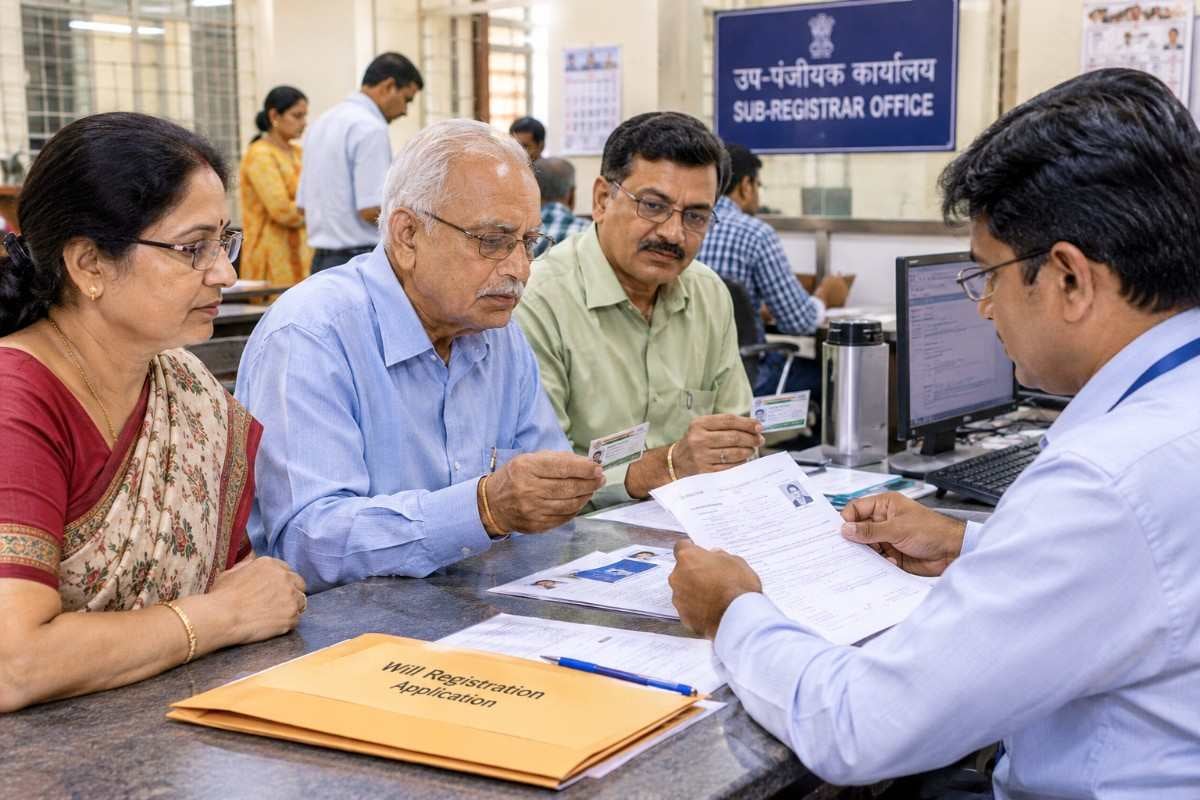
Registering a Will is optional in India under Section 18 of the Registration Act, 1908, not mandatory, but it does add a layer of authenticity. If you register at the sub-registrar’s office, it may ask for the testator’s ID and address proof, witness identification, and photographs, and in some cases additional documents. Requirements vary by state and office, so it’s worth confirming the current checklist with that specific sub-registrar’s office before your appointment.
For an elderly testator, a recent medical assessment or fitness certificate can also be useful to have, or may be requested by some sub-registrar’s offices. It can help support the record later if capacity is ever questioned.
What Happens If You’re Missing Some of These Documents?
Nothing stops you from starting.
A Will doesn’t need to be finalised in one sitting, and it’s common to begin drafting with the information you have, then fill in gaps like exact account numbers or a property’s survey number once you’ve tracked them down. AasaanWill can help you get started with the information that is readily available and incorporate other details into the Will once the rest of the information is ready, rather than waiting until everything is perfectly in hand.
Common Mistakes to Avoid While Gathering These Documents
A few patterns come up often enough to be worth flagging directly:
Instead of listing a bank account by branch name alone, record the bank name, account number, branch, and account type.
Instead of naming a beneficiary informally, such as “my younger daughter,” use their full legal name and relationship, with a date of birth where that helps avoid confusion.
Instead of leaving an executor unaware they’ve been named, discuss the appointment with them before the Will is finalised.
Instead of assuming a guardian for minor children will “work itself out” later, name one clearly and confirm they’re willing to take on the role.
Instead of relying on outdated property or address details, check they still match current records before the Will is finalised.
How AasaanWill Helps
Pulling together the right information before you draft a Will is easier with someone experienced to guide the process. Our team assists with:
Helping you draft and register a Will once your information is ready, including guidance on what to gather first
Explaining exactly which documents matter for registration versus an unregistered Will
Helping you describe property, bank accounts, and other assets clearly, to reduce ambiguity and make things easier for your executor
Guiding you on appointing an executor and, where relevant, a guardian for minor children
Conclusion
Making a valid Will in India doesn’t require a mountain of paperwork. The law only asks for a signed document and two witnesses. What genuinely helps is having your identity, property, financial, and beneficiary details organised before you start, so the Will is specific and hard to dispute later. If you’re putting this checklist together and want help turning it into a properly drafted Will, AasaanWill’s team can guide you through it.
Frequently Asked Questions
1. What documents are legally required to make a Will in India?
None beyond the Will itself. Under Section 63 of the Indian Succession Act, 1925, a Will is valid once signed by the testator and attested by two witnesses.
2. Should I include digital assets and online accounts in this checklist?
Yes. It’s increasingly common to note login or access instructions, kept securely, for digital and online accounts, along with any business interests and nomination details, since these are easy to overlook in a traditional checklist.
3. Do I need property papers to include real estate in my Will?
You don’t need to attach them, but having the sale deed or title details on hand helps you describe the property precisely, which makes the Will easier for an executor to act on.
4. Is a PAN card or Aadhaar card compulsory to write a Will?
No, but having proof of identity ready is useful, especially if you plan to register the Will, since the sub-registrar’s office will typically ask for it.
5. What details do I need for my bank accounts?
Ideally the account number, bank name, and branch for each account you want to mention, so your executor can identify and access them without guesswork.
6. Do I need ID proof for my beneficiaries?
It helps, though it’s not mandatory. Full legal names and clear relationships are usually enough to avoid confusion about who’s meant.
7. What documents does an executor need to provide?
Just their full name, address, and relationship to you. Formal consent isn’t a document needed at the drafting stage, though discussing the appointment with them beforehand avoids surprises later.
8. Do I need photographs to make a Will?
Photographs are commonly requested for registration, but exact requirements can vary by state and office.
9. Can I update my Will later if I acquire new assets or find missing documents?
Yes. A Will can be revised or replaced at any time while you’re of sound mind, so new property, accounts, or other assets can be added whenever you update it.
10. Do witnesses need to provide ID proof?
For registration, the sub-registrar’s office will usually ask for it, though exact requirements vary by office. For an unregistered Will, keeping their basic details on file is good practice rather than a strict requirement.
11. Can a family member be a witness to my Will?
They can, but if that family member is also a beneficiary, their own gift under the Will becomes void by law. Using independent witnesses who aren’t beneficiaries avoids this entirely.
12. Does naming a nominee on my bank account or insurance policy mean I don’t need to mention it in my Will?
No. A nomination usually just tells the bank or insurer who to pay first. It doesn’t override who’s legally entitled to the money under your Will or succession law, so it’s still worth mentioning the asset in your Will.
13. What documents are needed if I want to appoint a guardian for my children?
Just the guardian’s name, address, and relationship to the children, along with confirmation that they’re willing to take on the role.
14. Is a marriage certificate needed to write a Will?
Not legally, but it can help establish relationships clearly, particularly if your spouse or children are named as beneficiaries and there’s any possibility of confusion.
15. Can AasaanWill help me gather and organise these documents before drafting?
Yes. AasaanWill can guide you on exactly what to gather, help you draft around any missing details, and update the Will once the rest of your information is ready.
Disclaimer:
This article is for general informational purposes only and does not constitute legal advice. The information presented reflects the law as of the date of publication. For advice on your specific situation, please consult a qualified advocate.
If you’re putting together your Will checklist, talk it through with AasaanWill. Get started with AasaanWill today.
Get in touch with us
Not sure about anything? We are just one phone call away. Book a free 15 minute consultation.

+91-8764447848
+91-8919084868

+91-8764447848
+91-8919084868
AasaanWill’s Privacy Commitment to you
We never use your data without your consent, or sell it to a third party.