

Can You Make a Will Digitally in India? E-Signatures and the Law
India has embraced digital signatures for contracts, tax filings, and property registrations. So it seems natural to assume that a Will made digitally, signed with an e-signature, would be just as valid. That assumption is wrong.
A digital Will is not legally recognised in India. The laws that govern e-signatures and digital documents in India specifically exclude Wills from their scope. This blog explains why, what the current law actually says, and what options exist for someone who wants a convenient, modern process for making their Will.
Key Highlights
A digital Will is not valid in India. The Indian Succession Act requires physical signing and in-person witnessing.
E-signatures do not apply to Wills. The IT Act, 2000 explicitly excludes documents requiring physical attestation.
Video call witnessing is not legally recognised under Indian law.
You can draft your Will online, but the final execution step must be physical.
Registering your Will adds an official government record and makes it harder to challenge.
What Indian Law Says About Digital Wills
The two laws that govern digital signatures and electronic documents in India are the Information Technology Act, 2000 and the Indian Succession Act, 1925. These two Acts together settle the question clearly.
The Indian Succession Act requires a Will to be in writing, signed by the testator, and attested by two witnesses who are both present at the time of signing. The witnesses must sign in the presence of the testator. These are physical requirements: a physical document, a physical signature, physical witnesses present in the same room.
The Information Technology Act, 2000 does recognise electronic records and digital signatures as legally valid for most purposes. However, Section 1(4) of the IT Act specifically excludes documents that require physical attestation under any other law. A Will falls squarely in that category. This means the IT Act's provisions for digital signatures do not apply to Wills. An e-signature on a Will carries no legal weight under Indian law.
Can a Will Be Witnessed Over Video Call in India?

No. The requirement under the Indian Succession Act is that witnesses must be physically present with the testator at the time of signing. A witness watching over a video call does not meet this requirement.
Video-witnessed Wills became a topic of discussion during the pandemic, when several countries temporarily relaxed their witnessing rules to allow remote attestation. India did not make any such change. The physical presence requirement remains in force. A Will witnessed by video call is not valid in India, regardless of how the call was recorded or documented.
This is not a technicality. The physical presence requirement exists to prevent fraud and to ensure that the testator is signing freely, without pressure, in front of people who can confirm what they saw. A video call cannot replicate that assurance under Indian law.
What Does "In Writing" Mean for a Will in India?
The Indian Succession Act requires a Will to be "in writing" but does not specify handwriting or any particular format. A typed Will printed on paper is valid. A handwritten Will on plain paper is valid. The writing requirement simply means the Will must exist as a physical document that can be presented, examined, and attested.
A Will stored as a file on a computer, a PDF on a device, or a document on a cloud platform does not satisfy the "in writing" requirement in the legal sense. The document must be a physical paper document at the point of signing and attestation.
This distinction matters for anyone who drafts their Will using an online platform or a word processor. The digital draft is a useful tool, but it becomes a valid Will only when it is printed, physically signed by the testator, and physically attested by two witnesses.
Can I Make a Will Digitally in India Using Any Method?
The process of drafting a Will can certainly happen digitally. Many people use online platforms, document tools, or legal services to prepare the content of their Will. This is perfectly fine. The digital process helps people think through their assets, choose their beneficiaries, and get the language right.
The issue arises at the point of execution. No matter how the Will was drafted, the final step must be physical.
The Will must be printed as a paper document.
The testator must sign the physical document.
Two witnesses must be physically present when the testator signs.
Both witnesses must sign the document in the testator's presence.
There is no shortcut to these steps under current Indian law. A Will that skips any of them, whether by using an e-signature, signing digitally, or having witnesses attest remotely, is not valid.
E-Signature Will in India: Why the Law Has Not Changed
The exclusion of Wills from the IT Act's digital signature framework is deliberate. Wills deal with the final distribution of a person's estate after death. The testator is not available to confirm their intentions or contest forgeries. The law sets a high bar for execution precisely because of this.
The physical requirements serve a protective purpose. Witnesses who are present in the room can speak to the testator's mental state, confirm that no one was exerting pressure, and verify that the signature is genuine. These safeguards would be significantly weakened if Wills could be signed and witnessed digitally.
There have been discussions in legal circles about whether India should modernise its Will execution rules, particularly after the pandemic-era changes in countries like the UK and several US states. As of now, no such amendment has been made to the Indian Succession Act. The physical requirements remain unchanged.
What Happens If a Will Is Signed Digitally in India?
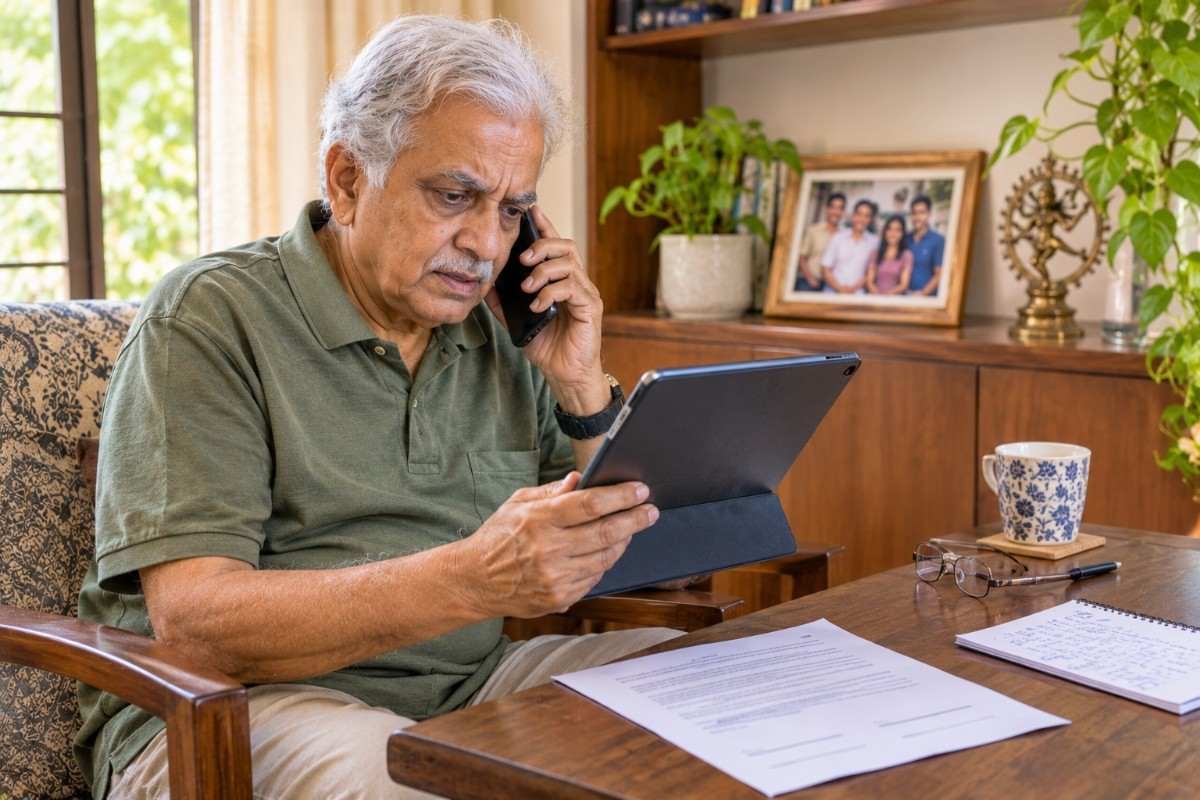
A Will signed with an e-signature or executed without physical witnesses present is likely to be treated as invalid by an Indian court. This means the testator's estate would pass as if no Will existed, under the default succession rules of the applicable law.
For Hindus, the Hindu Succession Act, 1956 governs who inherits. For Christians, Parsis, and others, the Indian Succession Act applies and for the Muslim, the Muslim Personal Law applies. In either case, the assets go to the legal heirs in the statutory order, not to the people the testator named in the invalid Will.
The people the testator wanted to protect, a live-in partner, a close friend, a charitable cause, a child from a previous relationship, receive nothing. The people the testator may have wanted to exclude receive their statutory share. This is exactly the outcome a Will is meant to prevent, and a digitally signed Will provides no protection against it.
How AasaanWill Helps You Make a Legally Valid Will
AasaanWill uses technology to make Will drafting faster and clearer, while ensuring the execution process fully meets the legal requirements. Our Will services cover the complete journey, from guided online drafting to physical execution and optional registration. The team assists with:
Guiding you through the drafting process online, so the content of your Will is accurate, complete, and clearly worded before a single page is printed
Producing a clean, properly formatted Will document ready for physical execution
Advising on the correct signing and witnessing process so your Will is executed without errors that could make it contestable
Arranging registered Will services where the document is taken to the Sub-Registrar's office, adding an official record that significantly reduces the risk of a successful challenge
Storing your Will securely after execution and helping you update it when your circumstances change
Conclusion
A digital Will is not valid in India. E-signatures do not satisfy the Indian Succession Act's requirements, and remote witnessing over video call does not meet the physical presence rule. These are not bureaucratic formalities. They are the legal foundation that makes a Will enforceable and difficult to challenge.
The good news is that making a valid Will does not have to be difficult. The drafting process can happen entirely online. Only the final signing and witnessing step requires physical presence. You can read more about what happens when someone dies without a valid Will in our blog on property mutation after a father's death. AasaanWill handles the entire process, from digital drafting to physical execution, so your Will is both convenient to make and legally sound.
Frequently Asked Questions
1. Is a digital Will valid in India?
No. A digital Will is not legally valid in India. The Indian Succession Act, 1925 requires a Will to be a physical written document, signed by the testator in the presence of two witnesses who also sign the document. The Information Technology Act, 2000 specifically excludes documents that require physical attestation, which includes Wills. An e-signature on a Will has no legal standing under Indian law.
2. Can I use an e-signature for my Will in India?
No. E-signatures are not valid for Wills in India. Section 1(4) of the Information Technology Act excludes Wills from the scope of the Act's provisions on electronic signatures and records. The Indian Succession Act requires a physical signature by the testator, in the physical presence of two witnesses. This requirement cannot be satisfied by an electronic or digital signature.
3. Can my Will be witnessed over a video call in India?
No. Indian law requires both witnesses to be physically present with the testator when the Will is signed. A witness attending over a video call does not satisfy this requirement. India did not introduce any exception to this rule during or after the pandemic. The physical presence requirement remains in force under the Indian Succession Act.
4. Can I draft my Will online in India?
Yes. The drafting process can happen entirely online. Many people use online platforms or legal services to prepare the content of their Will. The digital draft helps get the language and structure right. However, the final document must be printed and physically signed by the testator in the presence of two witnesses. The digital draft itself is not a valid Will until it is properly executed on paper.
5. What makes a Will legally valid in India?
A Will is legally valid in India when it is in writing, signed by the testator, and attested by at least two witnesses who were both present when the testator signed. The witnesses must also sign the Will in the testator's presence. The testator must be of sound mind at the time of making the Will. These are the core requirements under the Indian Succession Act, 1925.
6. What is the difference between a typed Will and a handwritten Will in India?
Both are valid. The Indian Succession Act requires a Will to be "in writing" but does not specify handwriting or any particular format. A typed Will printed on paper and a handwritten Will on plain paper are both legally valid, provided both are signed by the testator and attested by two witnesses. The content and execution process matter, not whether the document was typed or handwritten.
7. Does a Will need to be registered in India to be valid?
No. Registration is not legally required for a Will to be valid in India. An unregistered Will that is properly signed and witnessed is valid. However, registering the Will with the Sub-Registrar is strongly advisable. Registration creates an official government record, makes the Will significantly harder to challenge, and reduces the risk of disputes after the testator's death.
8. What happens if a Will is not properly witnessed in India?
A Will that is not properly witnessed is likely to be treated as invalid by an Indian court. If the Will is invalid, the estate passes as if no Will existed, under the default succession rules of the applicable law. For Hindus, the Hindu Succession Act applies. For others, the Indian Succession Act governs. The assets go to the legal heirs in the statutory order, not to the people named in the invalid Will.
9. Can I store my Will digitally after it has been signed?
Yes. Once a Will has been properly executed on paper, a digital copy can be made for reference. However, the original signed paper document remains the legal Will. Courts and registrars work with the original. A digital scan or PDF copy is useful for reference but cannot replace the original signed document for legal purposes.
10. Are video Wills valid in India?
No. A video recording of a person stating their wishes is not a valid Will in India. The Indian Succession Act requires a Will to be a written document, signed and witnessed in the prescribed manner. A video recording, however detailed, does not satisfy these requirements. It may be used as supplementary evidence of the testator's intentions in some circumstances, but it cannot substitute for a valid written Will.
11. Has India changed its Will laws to allow digital Wills?
No. As of the date of this article, India has not amended the Indian Succession Act to allow digital execution of Wills. Several other countries, including the UK and some US states, introduced temporary or permanent changes to their Will laws during and after the pandemic to allow remote witnessing. India made no equivalent change. The physical requirements under the Indian Succession Act remain unchanged.
12. What is a video witnessed Will and is it valid in India?
A video witnessed Will is a Will where one or both witnesses attend the signing remotely over a video call rather than being physically present. This practice was introduced in some jurisdictions during the pandemic. It is not valid in India. The Indian Succession Act requires both witnesses to be physically present with the testator at the time of signing. Remote witnessing by video does not meet this requirement.
13. Can I make a Will on my phone or tablet in India?
The drafting process can happen on any device. Many people use their phone or tablet to prepare the content of their Will through an online platform or document tool. However, the final Will must be printed as a physical document and signed and witnessed in person. A Will that exists only as a file on a phone or tablet, however detailed, is not a valid Will under Indian law.
14. What is the role of witnesses in a Will in India?
Witnesses serve two functions. First, they confirm that the testator signed the Will voluntarily, in their presence, and appeared to be of sound mind. Second, they provide a record that can be called upon if the Will is contested after the testator's death. The Indian Succession Act requires at least two witnesses, both present at the time of the testator's signing, and both signing the Will themselves in the testator's presence. A person who stands to benefit under the Will should not act as a witness.
15. How does AasaanWill help with making a legally valid Will in India?
AasaanWill provides an online drafting process that helps you prepare the content of your Will clearly and accurately, covering all your assets and your chosen beneficiaries. Once the draft is ready, AasaanWill guides you through the physical execution process: printing the document, signing it correctly, and ensuring it is properly witnessed. AasaanWill can also arrange registration with the Sub-Registrar's office. The result is a Will that is both easy to make and fully legally valid.
Disclaimer:
This article is for general informational purposes only and does not constitute legal advice. The information presented reflects the law as of the date of publication. For advice on your specific situation, please consult a qualified advocate.
You came here looking for a simpler way to make your Will. AasaanWill gives you exactly that, online drafting, physical execution handled for you, and a legally valid Will at the end. Start with AasaanWill today.
Get in touch with us
Not sure about anything? We are just one phone call away. Book a free 15 minute consultation.

+91-8764447848
+91-8919084868

+91-8764447848
+91-8919084868
AasaanWill’s Privacy Commitment to you
We never use your data without your consent, or sell it to a third party.