
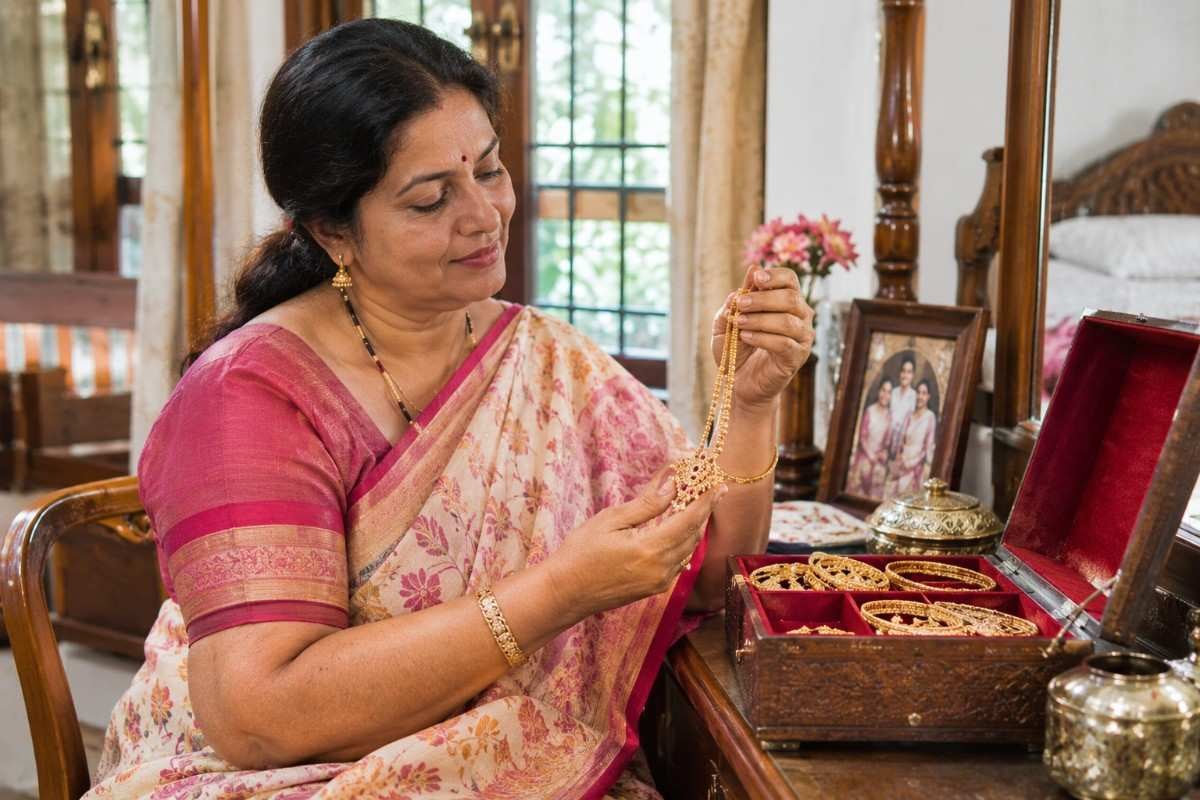
Stridhan: What Happens to a Woman’s Jewellery and Personal Property After Her Death?
When a woman passes away, her family may have questions about what happens to her jewellery, wedding gifts, cash and other personal belongings.
Does everything automatically go to her husband? Do her parents have a right to claim some of it? Can her children inherit her jewellery even if she never made a Will?
The answer depends on how she acquired the property, which succession law applies to her, and whether she left a Will.
Stridhan is a woman's own property. It does not automatically become her husband's or her in-laws' property after marriage. However, if she dies without a Will, specific succession rules determine who inherits it.
Let's understand what qualifies as Stridhan, who inherits it after a woman's death, and how making a Will can help her decide who receives her belongings.
Key Highlights
Stridhan generally includes jewellery and gifts a woman receives before, during or after marriage, which belong to her exclusively.
Section 14 of the Hindu Succession Act, 1956 recognises a Hindu woman's absolute ownership of property, including Stridhan.
Stridhan and dowry are not the same. However, the legal distinction depends on the circumstances in which the property was given.
If a Hindu woman dies without a Will, Section 15 of the Hindu Succession Act determines who inherits her property.
Property inherited from her parents or her husband’s family may follow a different succession route under Section 15(2).
A valid Will allows a woman to specify who should receive her jewellery, gifts and other property, subject to the personal law applicable to her.
What Is Stridhan?
Stridhan refers to property that belongs exclusively to a woman. Traditionally, it includes gifts received before marriage, at the wedding, and after marriage.
These gifts may come from her parents, relatives, friends, husband or in-laws.
Common examples include:
Gold, silver and diamond jewellery.
Cash and monetary gifts.
Clothes and other personal belongings.
Gifts received during wedding ceremonies.
Gifts received from her husband or his family.
The important distinction is that the property must have been given to the woman herself, rather than jointly to the couple or the family.
For example, gold jewellery gifted specifically to a bride at her wedding is generally her Stridhan. However, a property purchased jointly by a couple does not become her Stridhan simply because she is one of its owners.
Property purchased using her own earnings or otherwise acquired independently can also belong to her absolutely, even where it is not traditionally described as Stridhan.
How Is Stridhan Different from Dowry?
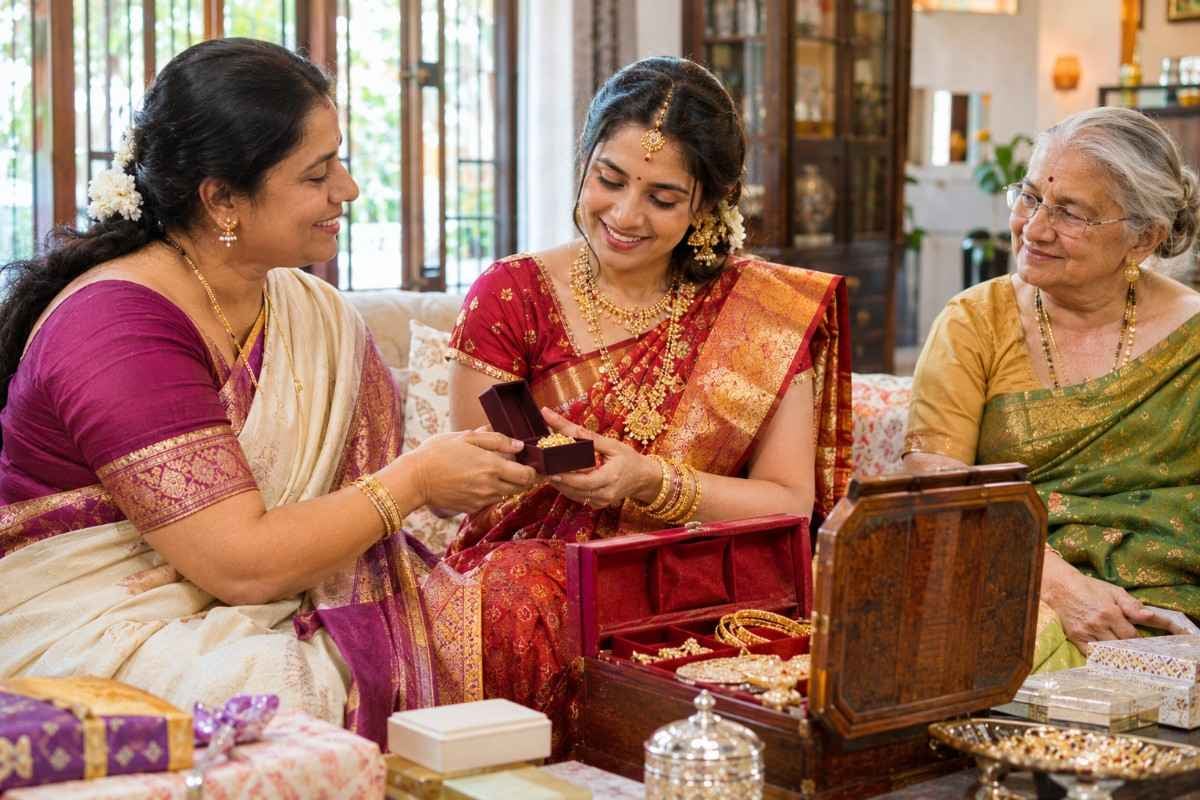
Stridhan and dowry are often confused, but they are not interchangeable terms.
Under the Dowry Prohibition Act, 1961, dowry includes property or valuable security given or agreed to be given, directly or indirectly, in connection with a marriage.
Demanding or giving dowry is prohibited by law.
Stridhan, on the other hand, refers to property belonging to the woman herself. It includes gifts given to her voluntarily, including wedding presents, provided they meet the applicable legal requirements.
The law also recognises certain voluntary presents given to the bride at marriage, without a demand, as exceptions under Section 3(2) of the Dowry Prohibition Act, subject to prescribed conditions.
The distinction matters because property belonging to a woman does not become her husband's or in-laws' property simply because it was received during marriage.
Is Stridhan a Woman's Absolute Property?
Yes. A woman has ownership and control over her Stridhan.
Section 14 of the Hindu Succession Act, 1956 recognises that property possessed by a female Hindu is held by her as its full owner, rather than as someone with only limited rights over it.
This includes movable and immovable property acquired through gifts, inheritance, purchase, personal earnings and other means recognised under the provision.
In practical terms, she can:
Wear or use her jewellery.
Sell or exchange her belongings.
Gift her property to someone else.
Leave her property to anyone she chooses through a valid Will.
Her husband and in-laws do not automatically acquire ownership of her Stridhan after marriage.
The Supreme Court has also clarified that a husband may use his wife's Stridhan in situations of extreme distress, but he has an obligation to restore the property or its value.
In Maya Gopinathan v. Anoop S.B. (2024), the Supreme Court reaffirmed a woman's absolute ownership and control over her Stridhan.
Who Inherits Stridhan If a Hindu Woman Dies Without a Will?
If a Hindu woman dies without leaving a valid Will, she is said to have died intestate.
Section 15(1) of the Hindu Succession Act, 1956 specifies the order in which her property devolves.
The order is as follows:
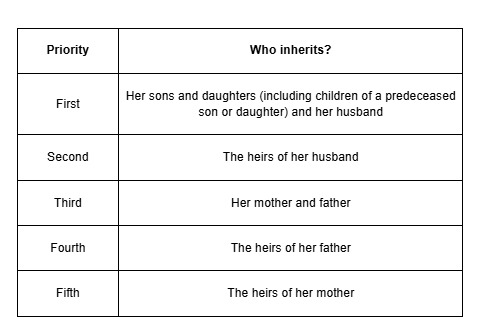
The categories are considered in sequence. If there are eligible heirs in the first category, the next category does not inherit under this order.
Importantly, people within the same category inherit simultaneously. For instance, her husband and children inherit together if they are alive and eligible.
These rules apply to Hindus, Buddhists, Jains and Sikhs, subject to the Act's applicability provisions and exceptions.
Other communities follow different succession rules:
Muslims: Inheritance is governed by the applicable Muslim personal law.
Christians: Intestate succession is generally governed by the relevant provisions of the Indian Succession Act, 1925.
Parsis: The Indian Succession Act contains separate provisions specifically governing Parsi intestate succession.
Therefore, the applicable law must be identified before determining who inherits a woman's property.
The Exception Most Families Don't Know About
There is an important exception under Section 15(2) of the Hindu Succession Act, 1956.
In certain circumstances, property inherited by a woman follows a different succession route from the general order explained above.
1. Property inherited from her parents
If a woman inherits property from her father or mother and dies without leaving a son or daughter (including children of a predeceased son or daughter), that property passes to the heirs of her father.
It does not follow the general order under Section 15(1).
2. Property inherited from her husband or father-in-law
Similarly, if a woman inherits property from her husband or father-in-law and dies without leaving a son or daughter (including children of a predeceased son or daughter), that property passes to the heirs of her husband.
Does this exception apply to wedding jewellery?
Generally, no.
The distinction is between property inherited through succession and property received as a gift.
For example:
If a woman receives gold jewellery as a wedding gift from her parents, it generally follows the normal succession order under Section 15(1).
If she inherits a house from her father and subsequently dies without children, Section 15(2) applies, and the property passes to her father's heirs.
This distinction is important because the source through which a woman acquired property can determine who inherits it after her death.
Does Writing a Will Change Who Gets the Stridhan?
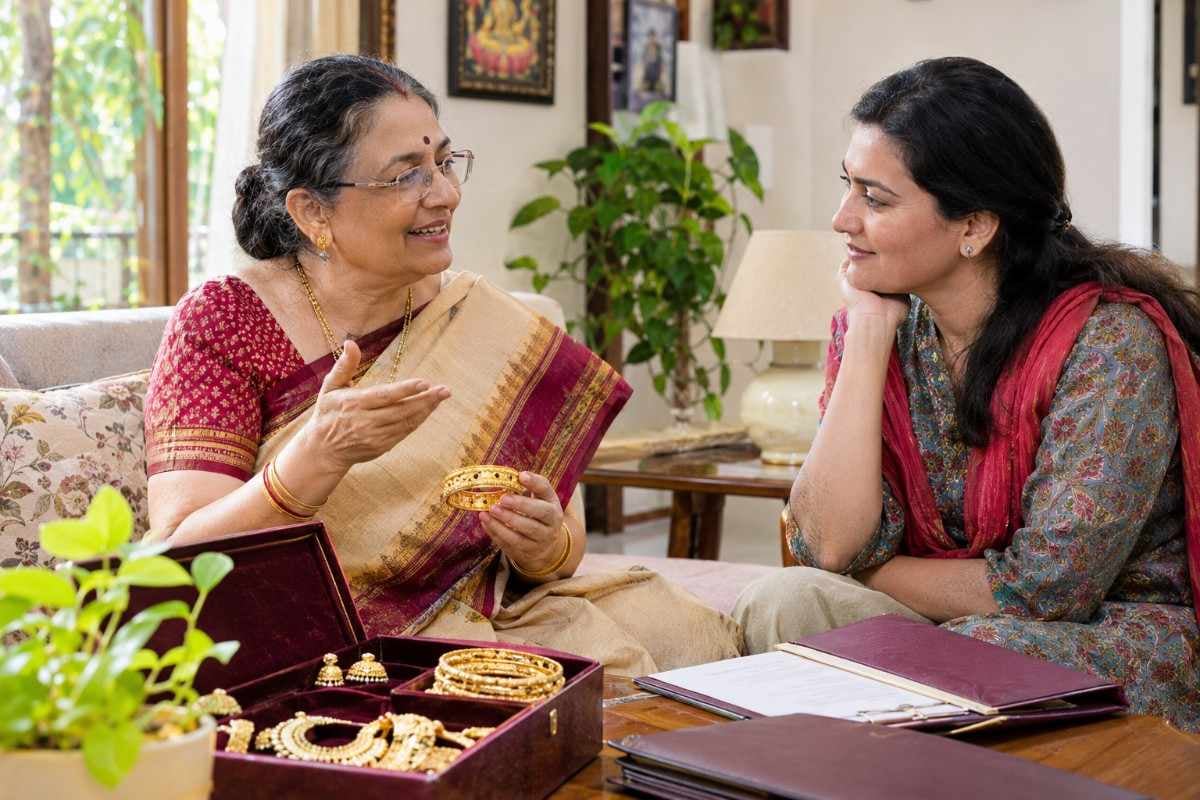
Yes. A Will allows a woman to specify who should receive her jewellery, personal belongings and other property after her death.
For a Hindu woman governed by the Hindu Succession Act, a valid Will can provide for the distribution of her property differently from the default intestate succession order.
For example, she may wish to:
Leave specific jewellery to her daughter.
Give certain wedding ornaments to her granddaughter.
Leave some personal belongings to her sister.
Divide her savings and other assets among her children in specified proportions.
Without a Will, the applicable intestate succession rules determine who inherits. Family members may have different expectations about who should receive particular belongings, which can lead to disagreements.
A Will helps record her wishes clearly while she is alive.
The rules governing testamentary succession can differ across personal laws. For instance, Muslim personal law places certain restrictions on testamentary bequests. Therefore, the applicable law should be considered while preparing a Will.
How AasaanWill Helps
A woman's jewellery, gifts and personal belongings may carry both financial and sentimental value. Deciding who should receive them is best done while she can express her wishes clearly.
AasaanWill combines digital convenience with legal expertise to help individuals plan for their family's future, including straightforward and complex succession requirements.
Our team can assist with:
Will drafting and registration: Preparing a customised Will that identifies who should receive specific jewellery, personal belongings and other assets.
Succession guidance: Explaining how inheritance rules apply to individual family circumstances, including the exception under Section 15(2).
Gift Deeds: Helping women who wish to transfer property to someone during their lifetime through an appropriate Gift Deed.
Legal Heir Certificates: Assisting families with the process of obtaining the relevant certificate after a person's death.
You can learn more about our Will writing services, Gift Deed services and Legal Heir Certificate assistance.
Conclusion
Stridhan belongs to a woman. It does not automatically become the property of her husband or his family after marriage.
If a Hindu woman dies without a Will, Section 15 of the Hindu Succession Act determines who inherits her property. While her children and husband generally inherit first, an important exception applies to certain property she inherited from her parents or her husband’s family.
A Will gives her the opportunity to decide who receives her jewellery, gifts and other belongings, rather than leaving those decisions entirely to the default succession rules.
Your belongings, your wishes, your decision. Plan ahead and make sure your family knows what you want.
AasaanWill can help you put those wishes into a clear and legally sound Will.
Frequently Asked Questions
1. What is Stridhan?
Stridhan refers to property belonging exclusively to a woman, traditionally including jewellery, cash and gifts received before, during or after marriage.
2. Is Stridhan the same as dowry?
No. Stridhan refers to a woman's own property, while dowry refers to property or valuable security given or agreed to be given in connection with marriage, as defined under the Dowry Prohibition Act, 1961. Certain voluntary wedding presents are exempt from the dowry prohibition subject to statutory conditions.
3. Can a husband or in-laws claim ownership of Stridhan?
No. A woman's Stridhan belongs to her exclusively. Her husband or in-laws do not acquire ownership simply because the property is kept in their custody or because she lives in their household.
4. Who inherits a Hindu woman's Stridhan if she dies without a Will?
Under Section 15(1) of the Hindu Succession Act, 1956, her property generally passes first to her sons, daughters (including children of predeceased children) and husband. If there are no eligible heirs in that category, the next categories are considered.
5. Does Stridhan always go to the husband's family first?
No. Her children and husband inherit together in the first category. The heirs of her husband come next only if there are no eligible heirs in the first category. The exception under Section 15(2) may also change the outcome for certain inherited properties.
6. What is the exception under Section 15(2) of the Hindu Succession Act?
If a woman dies without a son or daughter, including children of a predeceased son or daughter, property she inherited from her father or mother passes to her father's heirs. Property inherited from her husband or father-in-law passes to her husband's heirs.
7. Does Section 15(2) apply to wedding jewellery gifted by parents?
Generally, no. The exception applies to property inherited through succession from the specified relatives. Wedding jewellery given as a gift is generally governed by the normal succession order under Section 15(1).
8. Do these succession rules apply to all women in India?
No. Section 15 of the Hindu Succession Act applies to female Hindus as defined under the Act, including Buddhists, Jains and Sikhs, subject to its applicability provisions. Muslim, Christian and Parsi women follow their respective succession laws.
9. Can a woman leave her Stridhan to someone outside the default succession order?
Yes, a Hindu woman can generally leave her property to a person of her choice through a valid Will. The applicable personal law must be considered, as testamentary succession rules differ across communities.
10. Does Stridhan need to be registered or documented?
There is no general requirement to register jewellery or gifts for them to qualify as Stridhan. However, maintaining photographs, bills, gift records and an inventory can help establish ownership if a dispute arises.
11. What happens if in-laws refuse to return a woman's Stridhan?
A woman can seek legal remedies for the recovery of her Stridhan. Depending on the facts, withholding or dishonestly misappropriating property entrusted to a husband or his family may also attract criminal consequences for breach of trust.
12. Can a married daughter inherit her mother's Stridhan?
Yes. A daughter's marital status does not disqualify her from inheriting her mother's property. Under Section 15(1), daughters and sons are included in the first category of heirs.
13. Does it matter whether the Stridhan is jewellery, cash or immovable property?
The form of the property does not by itself change the succession order under Section 15. However, the way the woman acquired it can matter because of the exception under Section 15(2).
14. Why does it matter whether property was inherited or gifted?
Because Section 15(2) treats certain inherited property differently from other property. If a woman dies without children, property inherited from her parents or her husband’s family may pass to the heirs of the family from which she inherited it. Gifts generally follow the normal succession order.
15. Can AasaanWill help a woman decide who inherits her Stridhan?
Yes. AasaanWill helps women prepare customised Wills that clearly identify who should receive specific jewellery, gifts, personal belongings and other assets. Our legal team can also guide them through the applicable succession rules.
Disclaimer:
This article is for general informational purposes only and does not constitute legal advice. The information presented reflects the law as of the date of publication. For advice on your specific situation, please consult a qualified advocate.
If your family needs help working through Stridhan or succession questions, talk it through with AasaanWill. Get started with AasaanWill today.
Get in touch with us
Not sure about anything? We are just one phone call away. Book a free 15 minute consultation.

+91-8764447848
+91-8919084868

+91-8764447848
+91-8919084868
AasaanWill’s Privacy Commitment to you
We never use your data without your consent, or sell it to a third party.